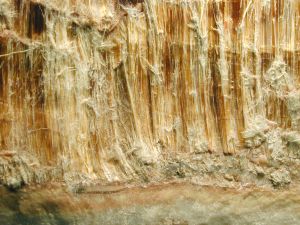
Sure – many know that insulation materials contained asbestos. But did you know automobile floorboards contained asbestos? How about movie curtains? Christmas Tree flock? Baking Sheets? Yes to all of them.
“The Asbestos Fact Book published in 1944 is one of best lists of asbestos products I’ve seen and a great article for anyone who wants to learn about asbestos” said noted asbestos lawyer Michael J. Mandelbrot. “We now know these products cause mesothelioma, lung cancer and other disabling diseases and many companies have hid information on their utilization of asbestos. But this list of uses in the Asbestos Factbook came out before the public learned on the dangers and is one of the most comprehensive list I’ve seen.”
Despite Conviction – Trustee Collusion, Bad Faith and Misconduct Continues to Harm Trust Beneficiaries
John Lynch IV- former employee of the Western Asbestos, J.T. Thorpe, Inc., and Thorpe Insulation Trusts pled Guilty this week to Felony Grand Theft and will face a sentence of up to 3 Years in State Prison in California for the ‘successful’ filing of a false Manville Asbestos Trust Claim (Sonoma County Case #SCR662265).
This “false” claim was solely discovered and reported to authorities by Plaintiff’s asbestos attorney Michael Mandelbrot, Esq. (California) and the Mandelbrot Law Firm while investigating and auditing Lynch improprieties at the Mandelbrot office (for which Lynch was also criminally charged in Marin County). Sentencing is scheduled for June 1, 2015 for the false Manville Trust claim. This is the first time in the United States an individual has faced criminal prosecution for a fraudulent asbestos bankruptcy trust claim. Continue reading
November is the month to raise lung cancer awareness to all! Although we may not all know someone with lung cancer, it is a disease that is affecting many today, and the more we know about it, the more support we can be for those who need it.
The Lung Cancer movement began in 1995; people began to raise awareness because the disease was becoming more well-known and more prominent. More people die from lung cancer in the United States than any other cancer, and this is true for both men and women. Here are what some recent statistics state:
Asbestos can ruin the lives of people who become sick with one of the many Asbestos- related diseases. Most people are exposed to asbestos while at work, which unfortunately, is where we spend most of our time. Being a great insulator, asbestos is often used as insulation in buildings and remains in many buildings today because it is more dangerous to take it out. Taking it out would cause the small asbestos fibers to become airborne which could then cause more harm than good. Now that asbestos is known to make people fatally ill with diseases such as Mesothelioma, Lung Cancer, and Asbestosis, help is available to compensate victims of asbestos disease.
In a current news article from the United Kingdom’s Ponteford and Castlford Express, a 67 year old woman was exposed to asbestos and diagnosed with Mesothelioma from her five years of working as a Tailoress in a factory. Mesothelioma is a rare cancer that is almost always caused by exposure to asbestos. Although the woman, named June Preston, worked in the factory for a short five years, it was plenty of time to come into contact with the tiny asbestos fibers that lodge into the lungs. Sadly, in March of this year, June passed away due to her exposure to asbestos. Her husband is currently seeking compensation for her death.
Asbestos is found in many factories and is extremely common in certain materials used in construction or similar jobs. It is said that in most big cities, you can find the small asbestos fibers in the lungs of the people who live there. Not all of those people will become sick, but those who have had enough exposure may. There are many jobs, job sites, and professions that can make your risks of contracting an asbestos related disease much higher than others such as:
Exposure to asbestos can cause various forms of diseases from asbestosis to various forms of cancer including mesothelioma. Exposure to asbestos often occurred in construction trades or industrial sites such as shipyards, refineries, power plants, manufacturing plants, foundries, paper mills, military bases and ships. Additionally, many wives were exposed through their husband’s occupational exposure to asbestos through dust brought home on their work clothes and performing cleaning and laundry in the family home.
Asbestos diseases have a long latency period between exposure and diagnosis. In many cases, the latency period can be up to 40 or 50 years. Many asbestos workers from the 1940’s through the 1980’s are just now showing signs of illness and are being diagnosed.
Asbestos manufacturers knew the dangers of asbestos as early as the 1920’s but actively conspired to keep their knowledge of the hazards of asbestos secret. The dangers of asbestos were uncovered in the late 1970’s after the government stepped in. Many asbestos manufacturers, suppliers and distributors are now willingly negotiating settlements for asbestos victims or voluntarily filing for bankruptcy protection to avoid further lawsuits and instead compensate victims through an Asbestos Bankruptcy Trust.
At the Mandelbrot Law Firm – The Asbestos Legal Center, we are really proud about the fact that we represent so many veterans, and their families, who have given so much in the service of our great country. Today, we just wanted to take a moment, to express our appreciation as we approach the 4th of July, and provide some information to make it easier for everyone to get out and enjoy the fireworks. Listed below is the firework celebration information for locations near some of the military stations located in California. We hope it is helpful.
In Coronado, the 4th of July celebration begins with a 15K run/walk that starts a 9:00am a North Beach. At 10:00am, a two hour parade will occur at Orange Ave, starting at First Street and ending at Churchill Place. The Fireworks celebration begins a 9:00pm, and will be displayed over Glorietta Bay.
The Fireworks display over San Diego Bay also starts at 9:00pm. The fireworks will be fired from barges located all over the Bay, including Harbor Island, Bay off Shelter Island, Chula Vista, and North Embarcadero.
At Camp Pendleton, the fun for service members and their families will being at 10:00am at Del Mar beach. There will be live bands, food, and kids activities. The fireworks begin at 9:00pm. Military ID is required for admittance.
The Party at Belmont Veterans Memorial Pier in Long Beach starts at 10:00a.m., and runs until 10:00pm. Local bands will provide the crowds with entertainment starting at noon. The event has a ticket price of $20 for adults and $10 for kids, however this includes a BBQ meal and beverage. Fireworks start at 9:00pm.
In Los Angeles, one of the biggest 4th of July Celebrations will be occurring at the Rose Bowl. The parking lot opens at 10:00am, the food stands will start serving at 2:00pm, and the stadium opens at 6:30pm. The fireworks show begins at 9:05pm.
Ticket prices are $13, though active military with ID and kids under 7 are free. Parking at the event costs $20.
The San Jose 4th of July Fireworks Celebration will be occurring at Kelly Park, courtesy of the minor league baseball team, the San Jose Giants. The fireworks start immediately after the game, at approximately 9:30pm.
In Alameda County, the County Fair is occurring from July 1st through July 19th.
The Fireworks display is occurring on July 6th.
There are no Fireworks in Oakland this year, but there is still is plenty of fun occurring throughout the day at Jack London Square. There will also be fireworks on July 3, after the Oakland A’s game at the Coliseum, at approximately 10:00pm. Tickets to the game are $15.
Finally, in San Francisco, fireworks are set to be fired of are barges located in the proximity of Pier 39 at 9:30pm. The waterfront from Aquatic Park, Ghiradelli Square, and along Fisherman’s wharf are some of the best locations to enjoy the show.
The Asbestos Legal Center is so proud of our clients who served in the military defending our country, and who now are courageously battling against mesothelioma, lung cancer, and asbestosis, would like to wish them and their loved ones a safe and enjoyable 4th of July. Continue reading
On Thursday, October 28, 2012, in a 5-4 decision, the United States Supreme Court upheld the constitutionality of the Obama’s Administration’s universal healthcare coverage legislation, also know as Obamacare. The law will make it illegal for insurance companies to decline coverage for individuals with pre-existing conditions. The full power of the legislation will not be enforced as law until 2014.
According to estimates based on data collected in 2010, approximately 49.9 million Americans are living in the United States without health insurance. In March of 2012, Mandelbrot Law Firm – The Asbestos Legal Center, a law firm representing mesothelioma patients and victims of asbestos related disease, estimated based upon the mesothelioma incidence rate for the general population, that as many as 16% of patients diagnosed with mesothelioma don’t have health insurance.
The Obamacare ruling on it’s face, seems to suggest that patients suffering from Mesothelioma and asbestos related disease who don’t possess health care coverage, should be able to purchase medical insurance to cover their healthcare needs after diagnosis. As malignant pleural mesothelioma is a disease typically associated with a nine month survival rate and costly medical treatments, including surgery, radiation, and chemotherapy, the ruling appears to be gigantic step towards extending the life of uninsured patients. But unfortunately patients have to wait until 2014 to get this help.
Until the law goes into effect in 2014, there are still options Mesothelioma patients without healthcare coverage can pursue, to pay their medical bills.
Veterans of the United States military suffering from asbestos related diseases should go to their local Veterans Administration Hospital, and pursue coverage through the Veterans Administration. Unfortunately, many of our service men and women were exposed to asbestos onboard U.S. Navy ships, and during their military service.
Another option mesothelioma patients without healthcare coverage can choose to obtain medical assistance, is to volunteer to participate in clinical trials. Given that the malignant pleural mesothelioma incidence rate is low in the general population, researchers have difficulty finding patients to work with to test new procedures and drug regimens. Often times there will be funding available to pay for travel related expenses and the medical care associated with the clinical trial. Mesothelioma patients without health care coverage should contact their local hospital and ask for information about clinical trials. There are always risks associated with clinical trials. That being said, many clinical trials for mesothelioma patients often have gone on for great lengths of time, and prior to entering a clinical trial a patient can ask for safety and efficacy data the trial has collected.
Still another option that mesothelioma patients can pursue to obtain funds to cover their medical bills, is to seek compensation in the tort system and bankruptcy courts.
Malignant pleural mesothelioma is considered a signature disease, meaning that is only has one cause, exposure to asbestos. Millions of dollars have been set aside in bankruptcy trusts, for individuals exposed to asbestos contained in the products of bankrupt companies. Moreover, individuals can file lawsuits against companies that are still in business, who caused their injuries. Patients diagnosed with mesothelioma should Continue reading
Victims of asbestos related disease caused by exposure to W.R. Grace products may have to wait longer to receive compensation from the W.R. Grace Asbestos Bankruptcy Trust. Although the company has been in bankruptcy for eleven years, appeals may still be filed up until July 11th, 2012, contesting the U.S. District Court’s confirmation of the company’s reorganization plan.
From 1963 until 1990, W.R. Grace operated large scale vermiculite mines in Libby, Montana. The vermiculite W.R. Grace mined was used in production of it’s product Zonolite attic insulation. It is estimated that as many as 35 million businesses and homes were insulated with Zonolite attic insulation between 1920 and 1990. However, unbeknownst to the general public, the vermiculite being mined by W.R. Grace at Libby was contaminated with asbestos.
In 2005, W.R. Grace and 7 executives at the Libby, Montana site, were indicted and faced prosecution from the U.S. Department of Justice for “knowingly” harming the people of Libby, Montana, and concealing information regarding the health hazards associated with it’s mining operation. According to the indictment, over 1200 Libby residents were suffering from an asbestos ailment. The case went to trial in 2009. Ultimately the company was acquitted in criminal proceeding that lasted over four years with appeals reaching the Supreme Court.
W.R. Grace sought bankruptcy protection in 2001. The company has faced over 270,000 lawsuits stemming from asbestos related claims, with approximately 120,000 cases still unsettled. It was alleged by the Justice Department, that prior to filing for bankruptcy, W.R. Grace illegally transferred four billion to five billion to other companies, to shield it from the bankruptcy court. Thereafter the Court ordered approximately one billion dollars be returned to the company coffers.
It is anticipated that there will be many more claims filed with the W.R. Grace Asbestos Bankruptcy Trust, by individuals who were exposed to Zonolite vermiculite contaminated with asbestos, and have since developed asbestos related diseases.
Please post this article to your social media website, “share” it, and “like” it, and help Mandelbrot Law Firm – The Asbestos Legal Center save lives.
For the last two weeks the Mandelbrot Law Firm – The Asbestos Legal Center has had their thoughts and prayers with a client, who has been struggling to leave the hospital after undergoing surgery to remove malignant pleural mesothelioma tumors caused, in part, by exposure to asbestos containing drywall. Malignant pleural mesothelioma is a cancer of the lining of the lungs that develops ten to thirty years after exposure to asbestos. There is no cure for malignant pleural mesothelioma. Asbestos exposure also causes lung cancer and asbestosis, a chronic scarring of the lungs.
In honor of this client’s battle with malignant pleural mesothelioma, Mandelbrot Law Firm – The Asbestos Legal Center has decide to create this blog article, warning the public about the hidden danger of asbestos contained in drywall sheetrock found in many of the homes and structures in the United States.